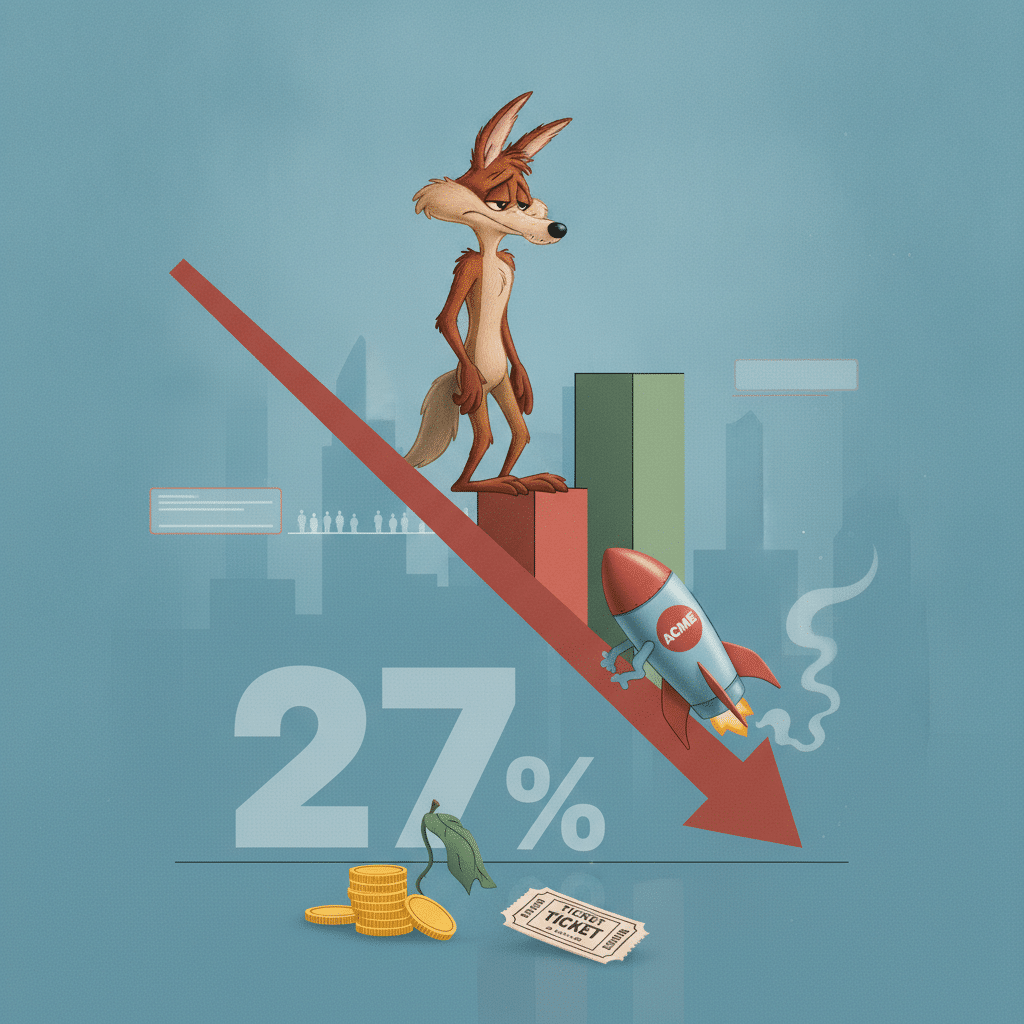
Coyote vs. Acme: Film box office in the US drops 27% on its second weekend
Announcements
The recent headline about the drop of only 27% in the box office of “Coyote vs. Acme” in its second weekend in American theaters may seem just a distant number to the Brazilian viewer. However, this data, apparently isolated, is an excellent starting point to unravel a much more complex universe: the life cycle of a film in the current industry and how it reaches (or not) to you. In a market saturated with options and with the line between cinema and streaming increasingly diffuse, understanding what these numbers mean is fundamental for the audience that seeks to enjoy the maximum of its experience without losing its experience.
The central question for the reader is not simply whether “Coyote vs. Acme” did well or poorly, but rather how do these performance indicators in the US translate into their own entertainment options here in Brazil. When will the film be available? Will it be worth waiting for streaming or will it be an unmissable experience on the big screen?What criteria do studios use to make these decisions and how do they affect your pocket and your time?This article serves as a guide to decode this new panorama, offering a practical insight into the gears behind the screens and how to navigate them in an informed way.
Deciphering Box Office Numbers: What Does a “27% Fall” Really Mean?
In the universe of the cinematic box office, the “queda” of a film in its second weekend and one of the most critical indicators of its performance and, most importantly, its long-term sustainability capacity.A drop of only 27%, such as that of “Coyote vs. Acme”, and indeed an extremely positive sign. But what does this really reveal?
More than Gross Numbers: The Force of Mouth to Mouth
The opening weekend is driven by a combination of curiosity, intense marketing and the anxiety of fans. Already the second weekend reflects, in large part, the “oca a boca” The organic reaction of the audience who watched the film. If people leave the cinema satisfied and recommend to friends and family, the drop will be lower. A typical drop for an average film, without great positive buzz, usually falls in the range of 50% to 60%. Movies with falls below 40% are considered exceptional“holds”, suggesting that the audience really liked what they saw the week and boosted sales.
Therefore, a 27% drop to “Coyote vs. Acme” suggests that the film was well received by early audiences, generating a good buzz and encouraging new viewers to give it a chance. This indicates longevity in movie theaters, which is a crucial goal for studios that invest heavily in productions and hope to recoup their costs and generate profit.
Factors that Influence Box Office Performance
- Competition: The number of new releases in the same week and the performance of competing films directly impact.If the following week has few weight launches or if competitors are weak, a film may have a smaller drop.
- Marketing: A well-executed marketing campaign can sustain public interest beyond the opening weekend, but word of mouth is what really makes the difference in the medium and long term.
- Critic: Although expert criticism does not always align perfectly with popular opinion, positive reviews can influence the decision to go to the movies.
- Genre and Target Public: Certain generously (such as horror or family movies) may have different fall patterns.Films for the family, for example, often have smaller falls, as audiences can watch at varying rates over several weeks.
- Holidays and Holidays: Periods of school holidays or long holidays can mitigate the box office drops, as there is more time available for leisure.
For the Brazilian viewer, understanding these factors helps contextualize the box office news and get a clearer sense of the potential of a film before it even gets here.
From American Cinema to Sofa Brasileiro: The Odyssey of Film Distribution
A film performance in the US is an important barometer, but its journey to the Brazilian public is a complex path, shaped by distribution strategies and constantly evolving release windows.
The Launch Windows: A Model in Transformation
Traditionally, film distribution follows a series of unique” “ windows:
- Cinematographic Window: The film is shown exclusively in theaters. This window used to be 90 days or more.
- VOD/PVOD Window (Video On Demand/Premium Video On Demand): After the exclusivity of the cinemas, the film can be rented or purchased digitally for a premium price.
- Home Entertainment Window (DVD/Blu-ray): After VOD, launch in midia physicala.
- Streaming Window: The film is available on subscription streaming platforms (Netflix, Prime Video, HBO Max, etc.).
- Paid/Open TV Window: Long after, the film can be shown on television.
Many studios have experienced hybrid releases (simultaneous film and streaming) or reduced exclusivity in theaters to 45 days, or even less.“Coyote vs. Acme”.Acme”, for example, has had a turbulent history of being planned for direct streaming, then for theaters, then again for streaming, before finally securing a limited release.These changes reflect the pursuit of studios to optimize their profits and reach audiences in varied ways.
The Impact in Brazil: Times and Platforms
In Brazil, decisions made in the US about release windows have a direct impact:
- Delay in Cinematic Launch: Many films arrive in Brazil weeks or even months after the US release, either by distribution strategy (to avoid direct competition) or by logistics.
- Streaming Availability: The streaming window for Brazil usually follows the global logic of the studio.If a film is Warner Bros. Discovery, for example, it is likely that its final streaming home is HBO Max in Brazil, but the time to get there may vary.
- PVOD and Digital Rental: Availability for rent or digital purchase in Brazil also follows the post-cinema schedule, often arriving a few weeks before the film integrates the catalog of a subscription service.
For the consumer, this means that patience is key. A movie that is pumping in the US may take time to get here, or may have a relatively fast streaming launch if the cinematic window is short. Be aware of the ads of Brazilian distributors and streaming platforms is the best way not to miss the releases.
Platform Warfare and the Value of Experience: Understanding Studio Choices
A studio's decision to release a film in the cinema or directly in streaming, or to significantly shorten the cinematic window, is a complex calculation that involves several factors, and that has direct implications for your experience as a viewer.
The Trade-Offs: Revenue x Subscriptions
For studios, the movie box office offers the highest profit margin per individual ticket.However, it is volatile and depends on external factors such as the performance of other films, weather, and the willingness of the audience to leave home. Streaming, on the other hand, offers a more predictable revenue based on subscriptions, in addition to valuable data on the consumption habits of subscribers. For films that may not reach large box office (perhaps because they are niche, less popular or with more specific appeal), streaming can be a safer and more profitable option.
The case of “Coyote vs. Acme”, with its back-and-forth story between film and streaming, perfectly illustrates this tension. Films like this one, with significant budgets but that may not be seen as “blockbusters of four quadrants”, often become pieces in this distribution chessboard, where the student seeks to maximize the value of their content, whether attracting subscribers to their platform or seeking a modest profit in theaters.
Which Experience to Choose?
For the viewer, the choice between film and streaming involves more than just convenience.It is a decision about the type of experience one seeks:
- Cinematographic Experience: Immersion, large screen, high quality sound, absence of domestic distractions, social aspect. Ideal for movies of great spectacle, with grand visual effects, or that benefit from the collective atmosphere.
- Streaming Experience: Convenience, cost-benefit (by subscription), flexibility of time, snack break, home comfort. Ideal for films that prioritize the story or the development of characters, documentaries, or simply for when practicality and priority.
Understanding the logic of the studios and the available options allows the viewer to make choices more aligned with their preferences and expectations, valuing each type of experience in its proper context.
Your Guide to Consuming Movies in a Fragmented World
With so many platforms and release windows, the Brazilian viewer needs tools and strategies to not get lost and enjoy the best of cinema and streaming.
What to Watch and How to Get Informed
- Follow Reliable Sources: Follow entertainment news portals (like this one), websites specializing in movies and series, and the social networks of distributors and studios.
- Tracking Tools: Use apps and websites that aggregate information about where to watch movies and series. Many allow you to create wish lists and receive notifications when a title becomes available on a specific platform in Brazil. Examples include “JustWatch” or “Reelgood” (check resource availability in Brazil).
- Streaming Newsletters: Subscribe to newsletters from your favorite streaming services. They often highlight upcoming releases and news in the catalog.
- Stay tuned for Announced Launch Windows: Many studios are now more transparent about when a movie will go to PVOD or streaming after its theatrical run.
Decision Criteria for the Spectator
- Think of the Desired Experience: Is the film visually stunning or sonic? Has a strong social appeal? Consider the cinema.Is it a more intimate story, a documentary, or something you want to watch on your own time? Streaming is a great option.
- Evaluate Cost-Benefit: A movie ticket or a VOD rental can be a one-time expense for a specific movie. A streaming subscription offers access to a vast catalog.
- Ponder the Urgencia: Do you need to watch the movie on release day to avoid spoilers or join the cultural conversation? So the initial options (cinema or PVOD) may be the most appropriate. Otherwise, waiting for streaming may be more economical.
- Consider Quality: A good “hold” at the US box office, such as that of “Coyote vs. Acme”, is a strong indicator of quality and positive reception, which may justify investing in a movie ticket.
Frequently Asked Questions About the Film and Streaming Market
1. Does a low-grossing film in the US mean it is bad?
Not necessarily. The box office is an indicator of commercial success, not artistic quality.Many critically acclaimed films have had modest box office performance, while blockbusters can be quickly forgotten.In addition, films can have very different orcations; which is low-ranking“ for a blockbuster can be a hit for an independent film.
2. Why do some movies come to streaming much faster than others?
This depends on the studio's distribution strategy, the agreement with streaming platforms (often the studio itself owns the platform), and the film's performance in theaters. Films that have not had great box office success can be brought faster to streaming to try to monetize them in another way and attract new subscribers to the platform. The overall shortening of cinematic windows is also a factor.
3. How can I know when a film will be available in Brazil?
The best way is to follow Brazilian entertainment news sites, the social networks of distributors (such as Warner Bros. Pictures Brazil, Universal Pictures Brazil, etc.), and the communications of the streaming platforms themselves. Apps such as“JustWatch” (with configuration for Brazil) also help track the availability of titles in different services.
4. What does it mean when a “ studio sells” a movie to a streaming platform?
This usually happens when a film is already produced, but the studio decides it is not worth the cost of a full cinematic marketing and release campaign.Then it sells the distribution rights to a streaming platform, which launches it as a “original” or exclusive.This can occur for a number of reasons, such as study strategy changes, underperforming in audience testing, or simply to optimize costs.
Understanding the complexity of the entertainment industry allows the Brazilian viewer not only to anticipate launches, but also to make more conscious choices and enjoy the vast universe of films and series with a more informed perspective.The case of “Coyote vs. Acme” is another reminder that behind each number there is a world of strategic decisions that ultimately shape your next home movie or marathon session. Keep curious, informed and always ready to discover the next big story.