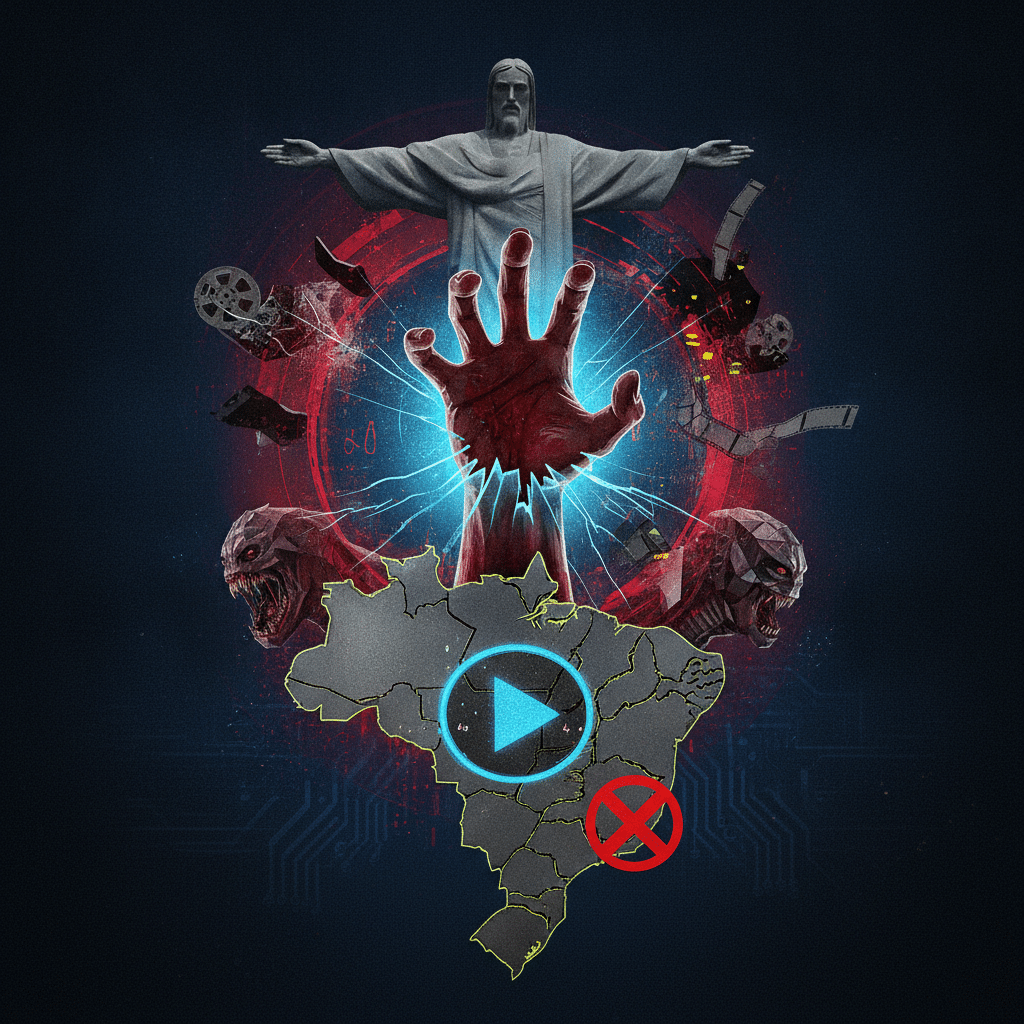
Cancelled from director and actor of 'Resident Evil’ for disclosure in Brazil
Announcements
The news that the arrival of director Zach Cregger and actor Austin Abrams, names linked to the universe of Resident Evil’, for publicity actions in Brazil was canceled may seem a mere detail on the agenda of the film industry. However, for the Brazilian viewer passionate about films and series, this type of change goes far beyond a calendar adjustment. It exposes a reality about how we connect with the content we consume, how we inform ourselves about releases and, more importantly, how we can become more strategic and critical consumers in an increasingly complex and unpredictable global market.
Far from being an isolated frustration, the absence of big names for promotional events invites us to reflect on the dynamics of the dissemination of works, the role of Brazil in this ecosystem and, above all, the tools we have at hand to form our own opinion, seek reliable information and engage with the productions that interest us, regardless of the physical presence of their creators. This article seeks to be a guide to navigate this landscape, transforming the eventual lack of direct contact into an opportunity for a deeper and autonomous content consumption.
The Complex Engineering of Disclosure: What Moves Stars (or Retains them)
The decision to take directors and actors to promotional tours in different countries is a meticulous process, driven by a number of strategic and economic factors.It is not only about goodwill, but a considerable investment of time, logistics and capital. Understanding this dynamic is the first step for the viewer to understand why certain markets are prioritized and others sometimes need to wait or accept alternatives.
Studios primarily assess the potential return on investment. This includes the size of the local film market, the historical box office for similar productions, media reach and the ability to reverberate news. Countries with more stable economies and a proven track record of box office success, or representing the largest share of global revenue, naturally attract more attention.
Brazil, despite being an emerging market with an engaged fan base and a growing streaming consumer audience, still faces challenges. Currency fluctuations, logistics issues, and even competition with other major global markets can influence the final decision.In addition, the talent agenda is extremely tight, and optimizing each trip to cover the largest number of territories with the maximum impact is crucial. A cancellation, such as the case of Resident Evil’s may derive from a last-minute agenda conflict, a reevaluation of the global marketing strategy, or even unexpected events that make the trip unviable.
Uncovering Launches: How to Inform and Evaluate Without Direct Hype
With the unpredictability of promotional visits, the power of information and critical evaluation becomes even more valuable for the Brazilian viewer. Not relying on the “tapete red” to connect with a film means developing a repertoire of sources and criteria to form your own opinion.
A common mistake is to rely exclusively on trailers or on the marketing campaigns of studios. Although they are important to arouse interest, these materials are, by nature, selling tools. For a more robust evaluation, it is fundamental to seek the diversity of opinions and the depth of analysis. This includes specialized press vehicles, both national and international, that offer more in-depth reviews and interviews. Portals such as Rotten Tomatoes and Metacritical consolidate an immense volume of criticism, providing an average that serves as a good initial thermometer, although it should not be the only source. They allow to distinguish the critical consensus from the perception of the public, which can often diverge.
The attentive viewer should also observe the background of the director, the screenwriter and the production team. A filmmaker with a consistent work in a specific genre or a screenwriter known for intelligent narratives already offers an indication of the expected quality. Accompanying interviews and debates in specialized podcasts, which often explore behind the scenes and creative intentions, can also greatly enrich the experience even before the release. The key is to be proactive in the search for knowledge, turning the absence of a public figure into an opportunity to deepen research and personal criticism.
Beyond Face-to-face Encounter: Authentic Engagement in the Digital Age
If the possibility of an autograph or a selfie with a director or actor is reduced, this does not mean the end of engagement with the universe of a film or series. The digital age offers numerous alternatives to connect with creators and content in meaningful ways, often with a level of depth that a brief promotional event could not achieve.
The official social networks of studios, directors and actors are a direct and constant channel to follow news, behind the scenes and sometimes participate in virtual question and answer sessions. Platforms such as Twitter, Instagram and YouTube have become stages for the release of small exclusive videos, testimonials and interactions that humanize the creation process. Many filmmakers and screenwriters use their personal accounts to comment on their work, influences and even to interact directly with fans, creating a more genuine and less scripted connection than formal events.
Another valuable avenue are the “making-ofs”, behind-the-scenes documentaries and in-depth interviews published on official channels or major international media outlets.These contents provide a dip in creative vision, production challenges and artistic choices, allowing the viewer to better understand the intent behind the work. Podcasts dedicated to film and series, in turn, often bring extensive analysis, debates and even interviews with industry professionals, offering perspectives that are rarely explored in shorter formats. By embracing these digital alternatives, the fan can build a richer and more informed relationship with the content, transcending the need for physical presence.
The Weight of the Brazilian Market: Challenges and Opportunities for the Fan
The perception of the absence of major promotional events in Brazil should also lead us to consider the role of the local market in the global entertainment scenario. Although it is a country with one of the largest populations in the world and a growing penetration of streaming platforms, Brazil still faces particularities that directly affect the launch and dissemination strategies.
Piracy, although fought, represents a persistent challenge for the industry, impacting revenue and, consequently, the appetite of studios for large investments in local promotion. The economy, with its currency fluctuations and import rates, can also influence the cost of marketing campaigns and the pricing of tickets and subscriptions, which, in turn, affects the profit margin and market attractiveness.However, the engagement and passion of Brazilian fans are undeniable, and the growth in the number of subscribers to streaming services proves the willingness of the public to consume content legally.
For the future, the consolidation of a robust subscriber base and the support of a good box office performance for major releases are key factors that can encourage studios to direct more resources and attention to Brazil. The ability to generate organic discussions on social networks and show the world the cultural impact of certain titles are also valuable metrics. By supporting the legal market, whether in cinema or streaming, the Brazilian viewer directly contributes to strengthening the position of the country and, who knows, attract more large events and, with them, the presence of more important names in the industry.
Checklist for the Watchful Spectator: Unraveling the Next Big Launch
To position yourself as an autonomous, well-informed viewer, able to form your own convictions about a movie or series, we have created a practical checklist.This guide will help you go beyond superficial marketing and dive into the information that really matters.
- Check the Creative Team: Research the background of the director, screenwriter and, if possible, the editor and director of photography. His previous works are a strong indicator of the style and quality expected.
- See Criticism Aggregators: Sites like Rotten Tomatoes and Metacritic consolidate reviews from expert critics.Watch the “Tomatometer” or average score, but also read some individual reviews to understand why the grade is.
- Read Specialized Vehicle Reviews: Seek analysis of renowned film portals and series, both national and international. Well-designed reviews offer context, script analysis, direction and acting.
- Explore Communities of Fans: Forums and groups on social media can offer perspectives from other fans, but filter out excess enthusiasm or destructive criticism.
- Watch Interviews and Backstage Content: Look for longer interviews with the cast and creative team. Many studios and streaming platforms offer“making-ofs” that reveal details of the production and the vision behind the work.
- Analyze Trailers Carefully: Use them to get an idea of the tone and aesthetics, but avoid them forming your final opinion. Remember that trailers are edited to generate impact, and may distort the entire experience.
- Stay tuned for Film Festivals: Films that premiere at major festivals (such as Cannes, Venice, Berlin, Toronto, Sundance) usually already have a good buzz and early reviews before commercial release.
- Evaluate the Marketing Campaign: Notice if the campaign focuses only on catchphrases and impactful scenes, or if it tries to communicate deeper aspects of the plot or artistic proposal of the film.
- Consider Franchise History (if applicable): In cases of sequels or reboots, reflect on how the new production positions itself in relation to the legacy of the franchise. Is it an evolution, a tribute or a rupture?
By following this checklist, you will be better prepared to decide if a launch is really worth your time and money, regardless of promotional events or the presence of stars.
The absence of directors and actors in promotional events in Brazil, as in the case of ''RESident Evil’, should not be seen as a setback, but as an invitation to a new form of interaction with the universe of cinema and series. Instead of depending on one-off meetings, the viewer has the power to become an active curator of his own content consumption.
This means going beyond the obvious, seeking diverse sources of information, delving into critical analysis and engaging with digital communities. In doing so, not only do you protect yourself from empty marketing, but you also contribute to a more mature and valued Brazilian market.The true connection with a work of art lies in understanding its essence, and this journey is always at your fingertips.