Perspectives of anime directors
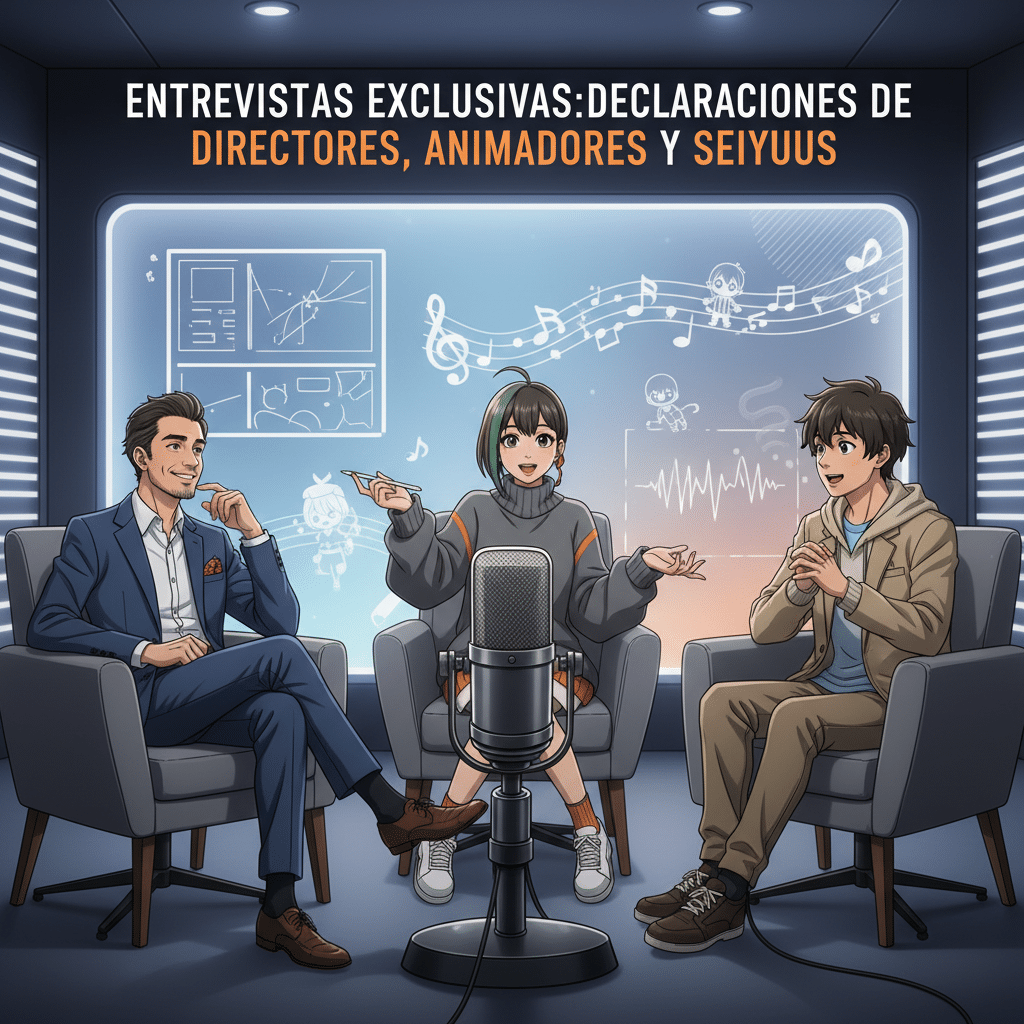
Exclusive interviews with anime directors offer a valuable look at the challenges in coordination and the necessary collaboration in each project. These professionals must integrate multiple ideas to create a cohesive work.
Additionally, they explain their approaches in narrative styles, from plots with defined endings to freer and more evolutionary narratives. These perspectives reveal the diversity of techniques present in the direction of anime.
Challenges in team coordination and collaboration
Anime directing involves uniting diverse teams with different visions, which is a great challenge for the director. Junichi Yamamoto highlights the importance of organizing these ideas to develop a solid and shared work.
Collaboration allows us to enrich the final product, overcoming the individual perspective. It is essential to foster a work environment where each member contributes their creativity and experience, thus favoring the collective result.
Thus, facing conflicts and finding common ground is a constant for directors, who must balance time, resources and styles to achieve a coherent and attractive anime for the audience.
Narrative styles in direction: from predetermined endings to free evolution
There are varied approaches to narrative in anime directing. Some directors prefer to define the ending from the beginning to maintain a clear trajectory during production.
Others, like Hayao Miyazaki, choose to allow the story to evolve freely, leaving room for creative exploration and unexpected changes that enrich the plot.
This last method can generate more complex and profound stories, although it presents the challenge of properly concluding the story so as not to lose coherence or interest.
Techniques and experiences of animators
Interviews with animators reveal the technical and cultural differences between Japanese and European animation, showing contrasts in processes and work styles.
In addition, they address the responsibilities and pressures which they face, especially in Japan, where quality and detail are especially demanding and demanding.
Technical and cultural differences between Japanese and European animation
Animators like Abel Góngora highlight that in Japan it is common for a single artist to draw characters, effects and backgrounds, while in Europe these roles are usually separate.
This concentration of tasks in Japan reflects one technical ambition greater and intensive focus on each frame, generating complex and detailed animation.
Cultural differences also influence the perception of work, since in Japan there is a deep commitment to perfection and respect for the artistic environment.
Responsibilities and pressure in Japanese animation
The pressure on the Japanese industry is intense, as animators must meet high standards and tight deadlines to satisfy fans and producers.
Additionally, animators are expected to be versatile and able to tackle multiple tasks, increasing workload and emotional burden during production.
This environment requires passion and dedication, but it can also generate significant stress, a recurring reality that emerges in interviews with these professionals.
Functions and preparation of seiyuus
Exclusive interviews with seiyuus highlight the complexity of his work, which goes beyond simple vocal acting. These actors must capture and transmit the emotional essence of their characters.
Additionally, they reveal how preparation includes script study, deep understanding of the role, and close coordination with the team to ensure an authentic and consistent interpretation.
Vocal interpretation and dubbing process
The dubbing process varies depending on the project, as sometimes the voice is recorded after the animation and other times before to guide movements and expressions.
The seiyuus not only provide voice, but also interpret the character's motivations and emotions, seeking to transmit authenticity and connect with the audience on an emotional level.
This work requires great vocal versatility, control and sensitivity to adapt tones and nuances depending on the context and evolution of the character.
Relationship with the team and emotional burden
Seiyuus work closely with directors, screenwriters and other actors to achieve a coordinated and cohesive performance that enriches the story.
They also face considerable emotional burden, as they must channel intense feelings from their characters, which can deeply affect their mood.
Interviews reveal that this emotional connection, while challenging, strengthens his commitment and passion for the art of dubbing, bringing authenticity to each performance.
Impact of interviews on understanding anime
Exclusive interviews offer a unique window into the human and technical side from the anime, showing how creativity and professionalism are intertwined in each project.
These conversations enrich the public's understanding, allowing them to appreciate the emotional depth and the details of the creative process behind the scenes.
Revelation of the human and technical side
Interviews reveal that anime is not only a visual product, but also a result of emotions, collaborations, and complex technical efforts.
Directors, animators and seiyuus share their personal challenges and methodology, showing the passion and technical detail that the anime industry demands.
Knowing these aspects humanizes professionals, showing that behind each work there are people who fight, innovate and are committed to quality.
Enrichment of the public through direct testimonies
The direct testimonies convey a unique experience that is not found in the simple observation of the anime, immersing the public in its creation.
This close connection fosters a greater appreciation for artistic and technical complexity, increasing respect for the work of those who bring anime to life.
Additionally, fans feel part of the process, which strengthens the community and expands interest in anime culture and art globally.