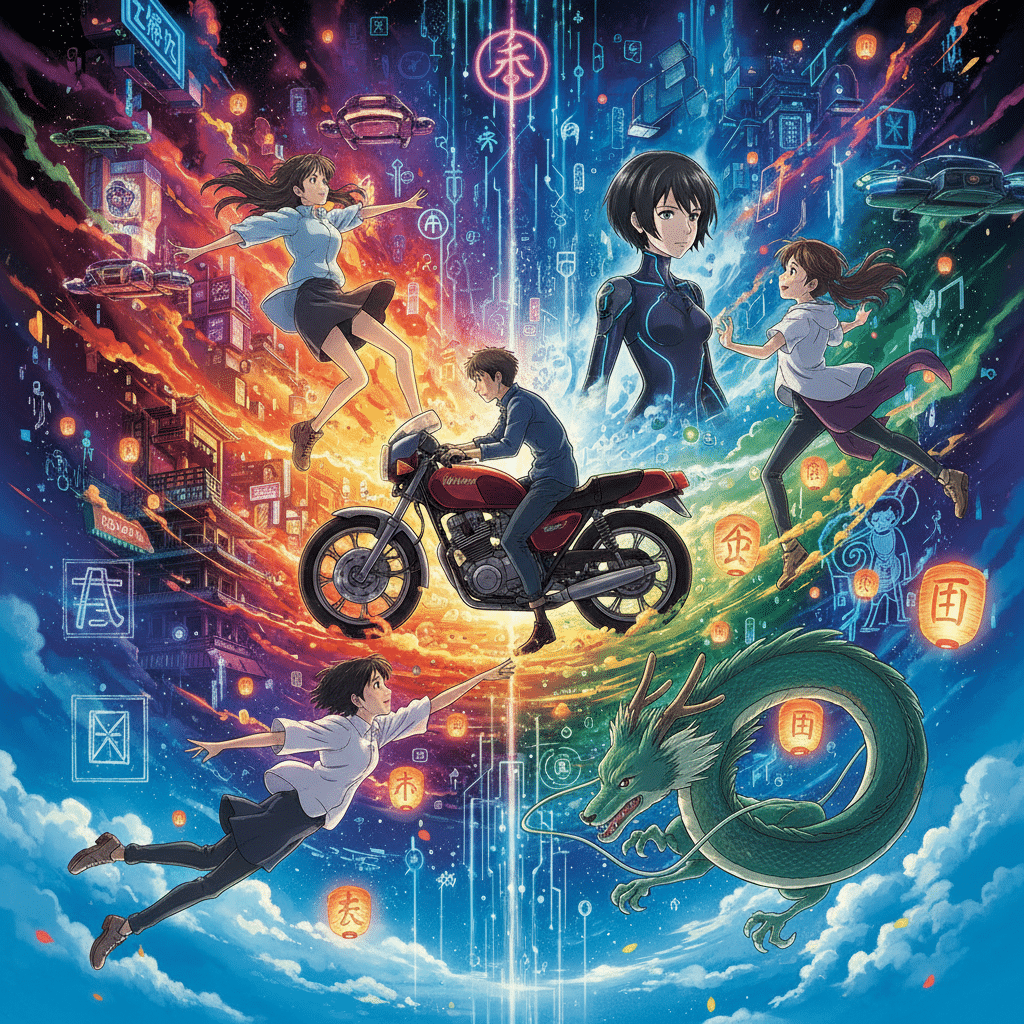
Movies that defined modern anime
Modern anime has been shaped by films that broke the mold and conquered global audiences. These works not only innovated in technique but in narrative, characterizing a new standard.
Their impact was so profound that they transformed the perception of anime, taking it from a regional art to an international cultural influence, appreciated beyond Japan and its original audience.
Akira and its global impact
Akira, directed by Katsuhiro Otomo in 1988, revolutionized animated cinema with its cyberpunk aesthetic and complex narrative. This film opened doors to anime in Western markets.
Its detailed animation and adult themes marked a before and after, inspiring filmmakers and creating a global phenomenon that changed the otaku industry and culture.
Chihiro's journey and her international recognition
“The Journey of Spirocompost, by Hayao Miyazaki, is the only anime film to win the Oscar for best animated film. Its magical world and universal message captivated global audiences.
This technical and artistic masterpiece cemented Studio Ghibli as a global symbol of quality and depth, elevating anime to a new cultural dimension.
Thematic and stylistic innovations
Anime films not only stood out for their art, but for addressing deep and original themes that revolutionized traditional narratives. Through these works, anime explored new perspectives and styles.
Its thematic and stylistic approach paved the way for more complex and visually striking stories, propelling Japanese animation as a mature and globally respected art form.
Nausicaä del Valle del Viento and its environmental message
Nausicaä of the Valley of the Wind, directed by Hayao Miyazaki, launched a powerful environmentalist and anti-war message that resonated globally. His story addresses the harmony between humans and nature.
This film is fundamental to understanding environmental awareness in anime, showing the fragility of the planet and the importance of peaceful coexistence, a rare theme in its time.
Ghost in the Shell and philosophical science fiction
The film directed by Mamoru Oshii delved into science fiction by fusing technology and philosophy. Explores topics such as identity, consciousness and the man-machine relationship with a sophisticated approach.
“Ghost in the Shell” is a key work that took anime into adult and deep plots, anticipating current ethical questions about artificial intelligence and humanity.
Perfect Blue and the psychological thriller in animation
Perfect Bluesatoshi Kon's 'Reimagined the psychological thriller using animation as a means to generate tension and confusion. Its narrative challenges reality and the perception of the protagonist.
This film innovated in the genre by combining themes of identity, fame and paranoia, leaving a lasting mark on the industry and serving as an inspiration for international filmmakers.
Anime in the digital age
The digital age has revolutionized the production and distribution of anime, expanding its technical and commercial horizons. Contemporary films combine traditional animation and CGI to create stunning visual experiences.
This technological advancement allows anime to reach a much broader global audience, demonstrating its ability to compete in international markets and attract both new and veteran fans.
Guardians of the Night: Kimetsu no Yaiba and its commercial success
Guardians of the Night: Kimetsu no Yaiba vern The Movie: The Infinite Train it became a box office phenomenon thanks to its great visual quality and emotional narrative. The film set an all-time record in Japan and abroad.
Its fluid and detailed animation, combined with a story that connects deeply with the audience, confirmed the strength of anime in the digital age to transcend borders and attract diverse audiences.
Furthermore, its success demonstrates how modern franchises can expand beyond manga and series, consolidating anime as an important pillar of today's global entertainment.
Legacy and cultural influence
Anime has left an invaluable legacy in global popular culture. Thanks to innovative films, the industry has experienced a technical and narrative revolution that redefined its standards.
These masterpieces not only transformed animation, but also expanded the global audience, turning anime into a cultural and economic phenomenon with repercussions beyond Japan.
Industry transformation and technical standards
The films that marked the history of anime drove the adoption of advanced techniques, such as digital animation and innovative visual effects that elevated artistic quality.
Studios like Ghibli and visionary creators set new standards, inspiring productions with more complex narratives and impeccable technical execution, which influences to this day.
This evolution allowed anime to establish itself as a globally recognized art form, gaining respect at festivals, awards, and diversified international markets.
Audience expansion and global otaku culture
The dissemination of iconic films attracted a diverse and global audience, extending otaku culture beyond Japan and generating international communities and events.
Digital expansion facilitated access to anime, increasing its popularity and creating a cultural connection between fans from different countries, who share passions and traditions.
This global phenomenon has encouraged the production of new content, sustained the industry, and ensured that anime continues to be a cultural engine of innovation and creativity.