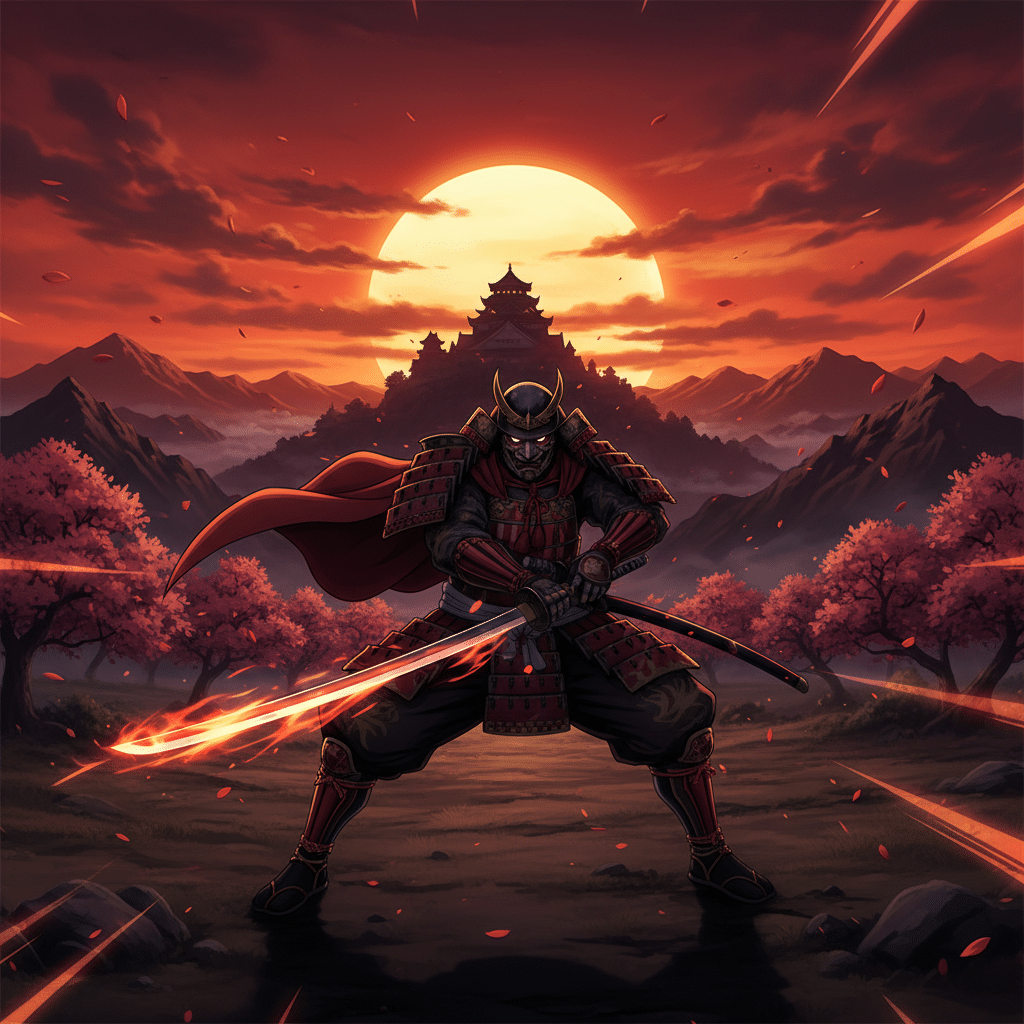
Characteristics of samurai anime in feudal Japan
Samurai anime stands out for its faithful representation of the Japanese feudal period, reflecting the importance of honor and the ethical codes that governed the lives of these warriors. These stories revolve around fundamental principles that mark every action and decision.
Furthermore, the historical setting and intense sword duels are key elements, managing to transport the viewer to a time where skill and loyalty were essential for survival and social respect.
Honor and ethical codes in the plots
Honor is a central theme in samurai anime films, captured through characters who fight to maintain their principles despite adversity. These codes reflect values such as loyalty, sacrifice and justice.
Samurai act under a rigorous set of rules known as bushidō, which guide their behaviors and shape plots, generating moral conflicts and deep dilemmas that enrich narratives.
These stories explore how respect for such codes can lead to personal redemption, even in dark settings where duty clashes with one's desires.
Sword duels and historical setting
Combat with katanas is a fundamental visual and narrative aspect, highlighting choreographies that combine technique and drama. These confrontations represent skill and the confrontation of personal ideals.
The historical setting is truthfully achieved with details in clothing, settings and architecture, giving life to feudal Japan and contributing to the immersive atmosphere of each story.
This fusion of action and historical context allows the viewer to understand the motivations and difficulties of the samurai, making the plots deeper and more realistic.
Emblematic films and their themes
Samurai anime films offer intense stories where traditional action and values intertwine, revealing profound lessons about the loyalty and the redemption. Each work stands out for its unique approach.
Exploring these titles represents a journey through feudal Japan and beyond, where the samurai embodies internal strife and moral conflicts in settings ranging from reality to futuristic fantasy.
Sword of the Stranger: redemption and loyalty
This film tells the story of a lonely ronin who must protect a persecuted young man, facing a painful past. The plot is sustained in the search for redemption through the loyalty and the sacrifice.
The katana battles are magnificently choreographed, with high-level animation. The historical context highlights the rigidity of the samurai code, emphasizing the moral weight in the decisions of the protagonists.
Sword of the Stranger stands out for its evocative musicalization and a narrative that balances action and deep emotional conflicts, showing how honor can redeem even the most marked warrior.
Ninja Scroll: loneliness and deadly conspiracy
This classic introduces Jubei, a wandering swordsman involved in an intrigue full of betrayals and supernatural enigmas within feudal Japan. Solitude and integrity mark his path.
Graphic violence and intense duels underline the oppressive and dangerous atmosphere. Ninja Scroll combines fast-paced action with an analysis of the warrior's isolation from conspiracies that challenge his honor.
This film is a benchmark in the genre for its ability to fuse fantastic elements with deep themes about the loyalty and the inner challenge of the samurai.
Afro Samurai: honor and futuristic revenge
In a futuristic universe, Afro Samurai keeps the tradition of honor codes alive. The narrative revolves around a personal crusade for revenge and maintaining his father's legacy.
His stylized visual style and hip-hop music gives him a modern tone that contrasts with his samurai roots, creating an interesting clash between past and future in the fight for respect and justice.
Afro Samurai delves into the complexity of honor in a violent and dystopian context, where traditional values are questioned about survival and identity.
Blade of the Immortal: Immortality and Justice
This film adapts the manga about Manji, an immortal samurai in search of redemption punishing criminals to recover his humanity. Immortality generates ethical dilemmas that drive action.
The narrative is loaded with stylized violence and a realistic approach to feudal Japan, where the justice he faces brutality and constant sacrifice in bloody duels.
Blade of the Immortal explores the limits of existence and moral responsibility, showing that the real battle is both on the field and in the soul of the warrior.
Adaptations of serialized anime to movies
Adaptations of anime series to films represent an opportunity to delve deeper into samurai stories with greater detail and production. These films offer greater visual and narrative development.
This format allows you to explore the internal conflict of the characters in the face of social changes, maintaining the essence of the anime but with a more condensed and emotionally intense narrative.
Rurouni Kenshin and Samurai Champloo: conflict and change
Rurouni Kenshin narrates the career of an ex-samurai who seeks to redeem himself by avoiding violence. The story reflects the dilemma of living in a time of transition, where the military past collides with a peaceful future.
For its part, Samurai Champloo fuses eras and styles, combining historical elements with a contemporary narrative. This mix represents the clash between tradition and modernity, showing emotional and social conflicts.
Both films highlight the internal struggle of their protagonists, who face their turbulent pasts in a changing Japan that questions the values of the samurai, which generates plots full of tension and growth.
Cultural impact and universal values
The samurai is much more than a warrior in anime films; It is a deep symbol of honor and sacrifice, values that transcend cultures and times.
The stories reflect universal dilemmas that connect with the viewer, showing how the samurai code inspires them to face conflicts with dignity and commitment.
The samurai as a symbol of honor and sacrifice
The samurai personifies the ideal of the warrior who acts guided by a strict code, where the honor and the sacrifice personal are the basis of your identity and actions.
These figures represent the internal struggle between duty and emotion, evidencing how fidelity to principles can lead to both redemptions and tragedies.
Its symbolism transcends feudal Japan and becomes a global archetype of ethical commitment, inspiring respect and admiration even outside the original historical context.
Animation as a means to revive the feudal era
The animation allows you to recreate in detail the settings, costumes and combats of feudal Japan, achieving a visual immersion that other media hardly achieve.
Additionally, this technique makes it easy to incorporate stylistic elements that intensify emotion and drama, revitalizing samurai legends for today's audiences.
Thus, anime functions as a cultural bridge that revives ancestral traditions, educating and entertaining through beautiful animated performances.