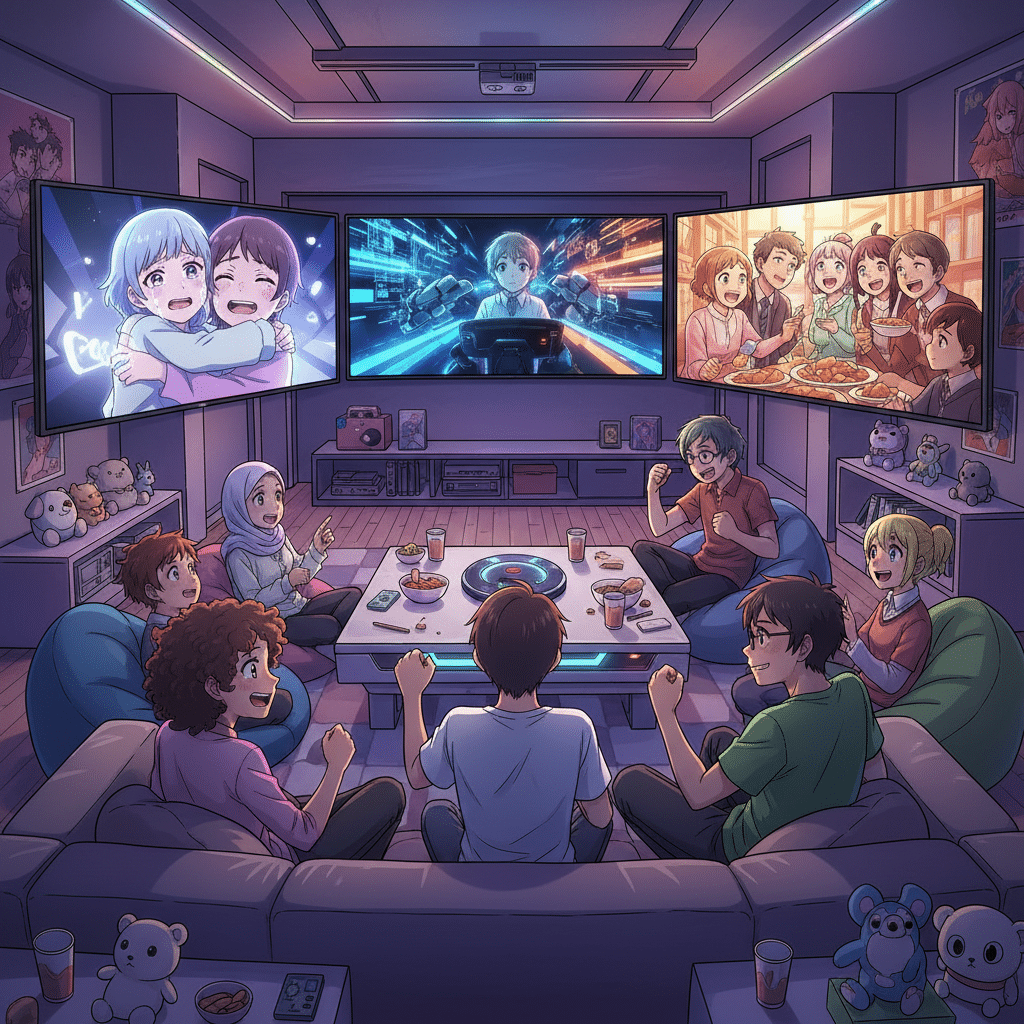
Central themes in anime for teenagers
Teen anime explores key themes related to identity and the emotional challenges that young people face as they grow up. These stories offer a deep look at their concerns.
Beyond entertainment, the films address issues such as the search for self discovery and the complexity of social relationships, reflecting the true experiences of today's youth.
Identity and self-discovery
The identity it is a fundamental axis in many anime films, where the protagonists face changes that lead them to better understand who they are and what they want. This connects with the adolescent need to define themselves.
Self-discovery occurs through internal conflicts and situations that challenge the characters' beliefs and emotions, allowing the viewer to reflect on their own personal path.
These narratives drive a unique connection between the audience and the protagonists, showing that the search for purpose is a shared experience in adolescence.
Relationships and emotional challenges
Teen anime also emphasize the interpersonal relationships and how they affect emotional development. Topics such as love, friendship and rejection are explored with sensitivity and realism.
Emotional difficulties linked to bullying, loneliness and social pressure are addressed, elements that many young people face daily in their school and family environment.
These stories foster empathy and understanding, helping teens find in anime a space to process their own emotions and challenges.
Emblematic films and their impact
Anime films for teenagers have marked a before and after by dealing in depth with topics relevant to youth. Through emotional stories, they reflect the complexity of the adolescent experience.
These films not only entertain, but also invite reflection, offering powerful messages about love, friendship, diversity and the importance of accepting the emotional challenges of this stage.
uesyour Name app: love and connection beyond time
ésYour Name armband is a masterpiece that explores the love and the human connection transcending the barriers of time. Two young people exchange bodies and find a unique bond.
The film addresses the search for identity and loneliness of contemporary youth, showing how shared experiences can overcome temporal distances and differences.
This film has deeply impacted adolescent audiences, reflecting the desire to be understood and the importance of purpose in life.
ÈA Silent Voice util: bullying and acceptance of diversity
ÎAA Silent Voice provides sensitive treatment of the topic of bullying and disability, focusing on redemption and the value of sorry. Tells the story of a young deaf woman and her attacker.
The film invites empathy and reflection on the damage caused and the need for acceptance, showing that overcoming prejudices is essential for coexistence and personal growth.
It is a call to understand diversity and value the importance of repairing past mistakes to move forward in life.
ÎI don't want to eat your pancreas.
Although its title is unusual, this film talks about friendship, the fragility of life and the urgency of taking advantage of every moment. It tells the relationship between an introvert and a sick partner.
Explores deep themes such as isolation, acceptance of mortality and the importance of expressing feelings, inviting people to live with intensity and authenticity.
This emotional story highlights how human connections can transform the way we face reality and the fear of loss.
Current topics in ÚTokyo Revengers arse and ÚBEastars arse
tétokyo Revengers arse combines time travel with the reality of youth violence, showing social pressure and the need to belong to a group, very representative topics for adolescents.
IBeastars applet uses animal characters to address discrimination and racism, reflecting on identity construction and complex dynamics in the school environment.
Both works stand out for their nuanced treatment of contemporary problems, encouraging youth audiences to reflect on their society and their own challenges.
Anime as a social reflection for teenagers
Anime has established itself as a medium that reflects the social realities that adolescents face, showing their concerns and challenges with great sensitivity. These stories contribute to the understanding of their environment.
Through its stories, anime offers a window to observe current problems and encourages empathy towards different situations, making young people feel heard and understood in their daily lives.
Representation and empathy through characters
The characters in the anime mirror adolescent diversity, showing different origins, characteristics and personal struggles. This allows young people to identify with their experiences.
Through these figures, empathy is promoted, since the audience comes into contact with realities that they may not know, which helps break down prejudices and open spaces for social understanding.
Careful representation of topics such as disability, discrimination or social pressure makes viewers connect emotionally and reflect on their own lives and environment.
Promotion of dialogue on contemporary problems
Anime not only entertains, but also drives conversations about relevant topics such as bullying, mental health and gender identity, sparking a healthy and necessary debate among young people.
These productions invite us to question social norms and express contained emotions, being a bridge for open dialogue in families and communities, promoting understanding and mutual support.
In this way, anime acts as a catalyst to address social problems honestly, raising awareness and promoting a positive change in adolescents' perception.
Emotional and social aspects in stories
Teen anime stories explore emotional aspects and social ones that resonate deeply with youth. These stories address complex emotions and personal relationships.
By reflecting real experiences, anime encourages self-reflection and the recognition of social problems, contributing to the emotional development of its viewers.
Criticism and self-reflection in the youth audience
The anime encourages young people to question their actions and emotions through plots that present ethical dilemmas and difficult situations. This creates a space for self-criticism.
By facing internal and social conflicts, viewers can identify patterns of behavior and reflect on their own experiences, promoting conscious personal growth.
This critical ability helps improve understanding of themselves and others, making anime a tool that transcends entertainment and promotes emotional maturation.
Influence of anime on identity construction
Anime contributes to the formation of the youth identity by presenting characters with diverse struggles and personalities, reflecting multiple experiences and values.
These stories allow adolescents to experience emotions and situations that help them understand their own doubts and aspirations, strengthening their self-knowledge.
In this way, the anime acts as a mirror and guide, facilitating the exploration of identity in a stage full of personal changes and challenges.