Basic differences between anime and manga
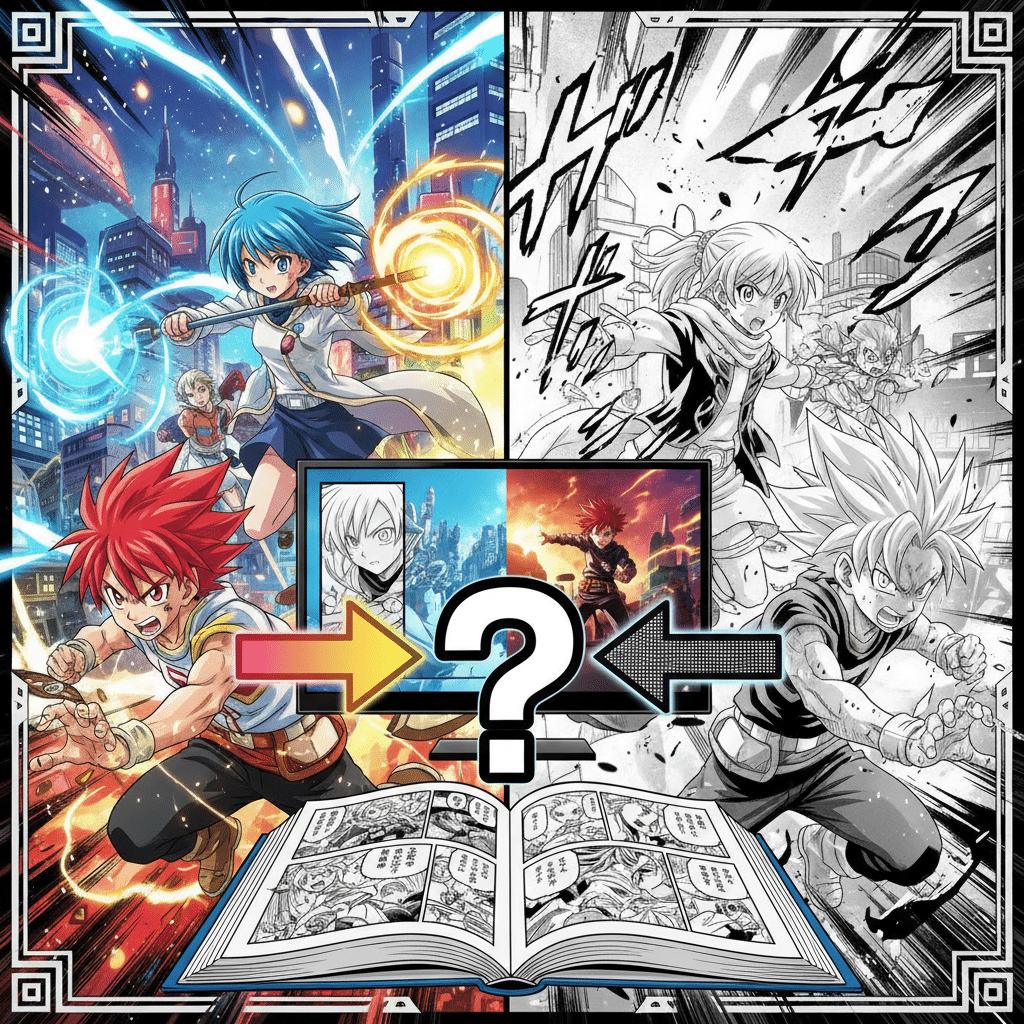
The anime and manga they are two formats that present the same story with different approaches. Each one offers a unique experience for the viewer or reader.
The manga is a traditional black and white work, generally created by one or two authors, where the narrative is developed with a high level of detail.
On the other hand, the anime is an animated color adaptation, created by a large team, which presents the story with audiovisual dynamism and greater media exposure.
Visual and production characteristics of the manga
The manga stands out for its detailed drawing and black and white format. Production is usually carried out by one or a few artists, which facilitates an original and deep vision.
Its development can extend for years, allowing a broad exploration of the plot and characters, with more personal and careful artistic control.
Additionally, manga is accessible to those who prefer a slower pace and want to appreciate every visual detail without external interference.
Visual and production characteristics of the anime
Anime is characterized by its vibrant colors and constant movement, offering an audiovisual experience that includes music and dubbing.
Numerous professionals participate in its production, from animators to composers, which adds dynamism but also limits details by time and budget.
This format is distributed in chapters or seasons, facilitating quick and visually attractive consumption for a wider audience.
Differences in content and narration
Manga adaptations to anime usually involve modifications and omissions necessary to adapt the story to the animated format. This affects the narration.
The differences are also seen in the exclusivity of content between both versions, which can present significant changes in development or style.
Finally, artistic styles vary significantly between manga and anime, reflecting different visual interpretations that enrich each medium.
Modifications and omissions in anime adaptations
Anime frequently skip scenes from the sleeve to fit time or budget constraints, which can trim or alter important arcs.
Changes also occur to adapt the content to regulations or censorship, which causes the narrative to lose some original nuances.
For these reasons, some relevant plots or details are reduced, and sometimes filler episodes are created to save time as the manga progresses.
Exclusivities and changes in manga and anime
Certain mangas are never adapted to anime, maintaining exclusive content for readers, while some animes are original stories.
In addition, there are changes in the plot or the outcome between both formats, which offers different experiences and reasons to consume both.
These differences allow manga and anime to complement each other, offering unique and sometimes contradictory versions of the same work.
Variations in artistic style between versions
The artistic style changes significantly between manga and anime, since the first usually has more detailed drawings and the second uses simpler and more dynamic animation.
In anime, color and movement add expressiveness, but sometimes simplify the original manga design to optimize production.
These variations offer a new visual perspective that can transform the perception and enjoyment of the story.
Factors for choosing to read manga or watch anime first
Deciding whether to read the manga first or watch the anime depends on what type of experience you prefer. Both formats offer unique advantages for different audiences and situations.
Considering the level of detail, fidelity to the original work and the way of consumption helps to choose the format that best suits each person's expectations.
Advantages of manga for a complete experience
Manga usually offers more narrative complete and faithful to the author's original vision, with details that are sometimes omitted in the anime.
In addition, it allows for slower consumption, ideal for those who enjoy delving deeper into the plot and analyzing the art calmly, without external interruptions.
It is especially recommended when the anime is incomplete or has additional non-adapted content, thus ensuring a full understanding of the story.
Advantages of anime for a dynamic introduction
Watching the anime first can provide an audiovisual experience dynamic and attractive thanks to the music, voices and animations that enrich the story.
This option is usually preferred by new fans or those looking for an immediate and exciting way to enter the work, facilitating visual understanding.
Anime can also condense the plot for fast and accessible consumption, ideal for those who have little time or prefer content on the move.
Recommendations to decide the order of consumption
When choosing between reading the manga or watching the anime first, it is essential to consider the type of work and personal preferences. Each format has unique strengths that enrich the experience.
The context and characteristics of the title influence this decision; Some works offer a more complete narrative in the manga, while others stand out in their animation and rhythm in the anime.
Considerations according to the type of work and preferences
If you are looking for a detailed experience that is faithful to the original vision, manga is usually the best initial option. It offers greater depth and no cuts in the story.
For those who prefer a visual and auditory introduction with music and movement, anime is ideal, especially if you value fast and dynamic immersion.
Some series have anime with original content or significant changes; In those cases, following the manga or anime first can totally change the perception of the plot.
Importance of personal taste and specific differences
The choice also depends on personal taste: those who enjoy slow reading and detailed art may prefer manga, while anime attracts those who love animation and fast pace.
It is also relevant to consider the fidelity of the adaptation, the existence of filler or the quality of the anime, factors that may make one format or another more advisable first.