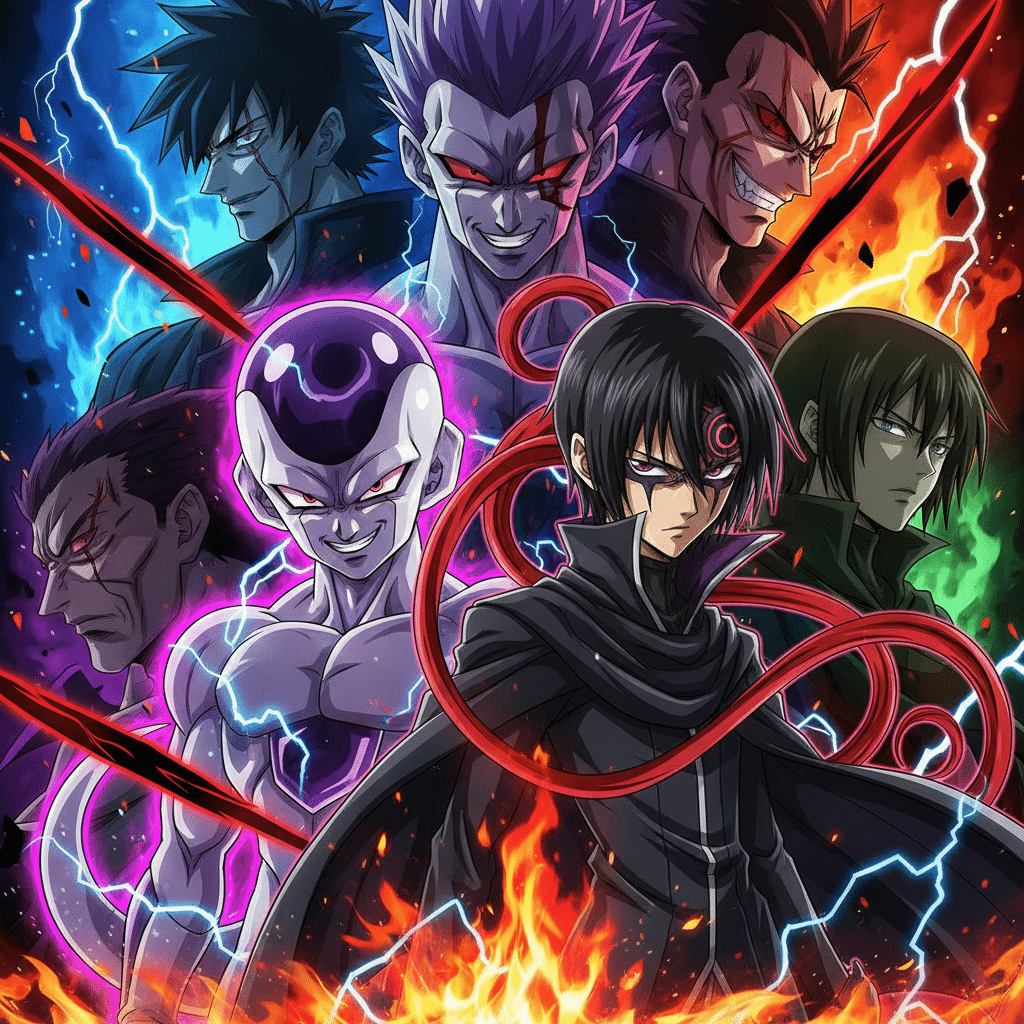
Iconic antagonists and their impact
The anime's antagonists have left an indelible mark on pop culture thanks to their depth and complexity. They not only act as villains, but also enrich stories with deep motivations.
Its impact goes beyond the confrontation with the hero, generating debates and reflections that transcend the screen. They are key pieces for the plots to become unforgettable and exciting.
Among these antagonists, Madara Uchiha and Light Yagami stand out for their unique visions and the impact they had on their respective animes, becoming legendary figures for fans.
Madara Uchiha: legacy and vision in Naruto
Madara Uchiha is one of Naruto's most iconic antagonists, known for his ambition and impressive power. His goal was to create an ideal world under the control of the Infinite Tsukuyomi, a dream of illusory peace.
His vision of a world without conflict led to enormous wars, leaving a legacy of destruction and manipulation. Despite his antagonism, his charismatic character generates admiration and respect among followers.
Madara represents the complexity of a villain whose convictions and methods spark debates about good and evil, bringing depth to Naruto's narrative and elevating its cultural impact.
Light Yagami: justice and obsession in Death Note
Light Yagami is an example of complex evolution into antagonists. He begins as an idealistic student seeking justice, but his obsession turns him into a ruthless vigilante with a distorted sense of morality.
His confrontation with L is a duel of intellects that marked a before and after in anime stories, creating intense psychological tension and keeping viewers in constant expectation.
Light's duality as a hero and villain appeals to fans as he explores deep themes such as absolute power, corruption, and the ethical consequences of his actions, cementing him as a memorable antagonist.
Character and strategies of memorable villains
The anime's memorable villains stand out for their complexity and intelligent strategies that make them formidable adversaries. His character defines the conflict and plot.
These figures don't just use force; Their manipulation, ambition and cruelty make the difference, generating unforgettable stories and shaking viewers with each action.
In this section, we will explore four antagonists whose personality and tactics were etched in the anime's history.
Sosuke Aizen: manipulation in Bleach
Sosuke Aizen is distinguished by his strategic mind and ability to deceive everyone in Bleach. His betrayal shook fans, demonstrating his mastery of control and planning.
His calm appearance and serene voice hide a calculating mind, capable of manipulating enemies and allies to achieve his goals of absolute power.
Aizen is not limited to physical strength; His intelligence makes him a villain who poses the danger of manipulation and misperception.
Dio Brando: ambition in Jojo's Bizarre Adventure
Dio Brando symbolizes excessive ambition and the desire for immortality in Jojo's Bizarre Adventure. His charisma and cruelty make him an unforgettable antagonist.
His willingness to dominate and survive leads him to commit heinous acts, but also makes him a powerful figure who constantly challenges heroes.
Dio's persistence as a recurring enemy demonstrates how ambition can be both a life force and a path to destruction.
Frieza: cruelty and confrontations in Dragon Ball Z
Frieza is the embodiment of cruelty and selfishness in Dragon Ball Z. His presence generates tension and constant dangers for the protagonists.
With a combination of overwhelming power and sheer evil, Frieza maintains his place as one of the most hated and feared villains in anime history.
Their epic confrontations, especially against Goku, are key moments that define the series and highlight courage in the face of extreme evil.
Griffith: betrayal and ambition in Berserk
Griffith represents the duality between friendship and betrayal motivated by iron ambition. His transformation into a villain triggers tragic events in Berserk.
His ability to lead and manipulate is essential to achieving his goals, but his betrayal marks a dark point in the story that shocked fans.
Griffith is a powerful reminder of how ambition can corrupt the strongest bonds and change destinies irreversibly.
Deep themes behind the antagonists
The antagonists in the anime not only represent external conflict, but also reflect moral dilemmas and complex human ambitions. This enriches the story and stimulates reflection.
By exploring their motivations, universal themes such as the struggle between good and evil, and the ethical consequences of their decisions, are revealed. This creates rich and memorable characters.
This depth invites viewers to question their own values and understand that the line between hero and villain may be blurrier than it seems.
Reflections on morality and ambition
Antagonists often show how ambition can lead to personal and other people's destruction, challenging traditional notions of morality in anime. Their actions generate debates.
Characters like Light Yagami illustrate the complexity of judging justice from different perspectives, showing that morality can be subjective and changeable depending on objectives.
Madara Uchiha and Griffith show how an idealistic vision, when combined with extreme ambition, can cause devastating consequences, questioning whether the end justifies the means.
Legacy and cultural relevance
Anime antagonists have transcended their stories to become cultural icons. Its influence goes beyond the screen and affects generations of fans.
Characters like Madara, Light and Dio symbolize universal themes and provoke philosophical debates, consolidating themselves as pillars in pop culture.
Influence on pop culture and fans
Featured villains are celebrated at conventions, fan art and merchandising, showcasing their huge impact on otaku culture and beyond.
Their complexity and charisma inspire discussions, theories and admiration, making followers connect emotionally with them.
These figures represent universal conflicts, giving them a special place in the identity and fan community globally.
The villain as a key element in the narrative
The antagonists drive the plot and develop the hero's evolution, adding tension and depth to the story.
Without them, the narratives would lose dynamism, since they represent the challenges that motivate the protagonists to improve themselves.
In addition, the villains provide perspectives that enrich the story, exploring themes such as morality, ambition and consequences.