Definition and characteristics of isekai anime
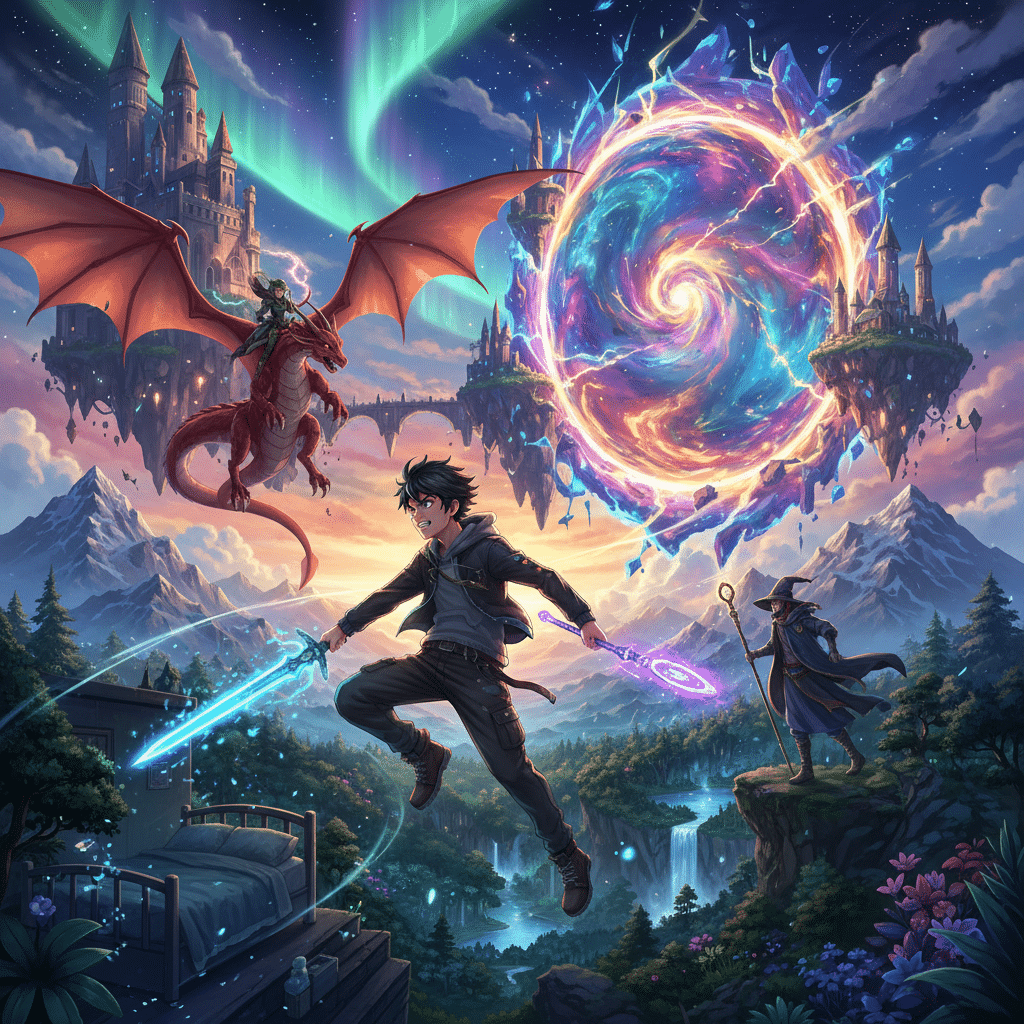
The isekai anime is a fantasy subgenre that features protagonists transported or reborn into parallel worlds full of magic and challenges.
In these stories, characters face new cultures and rules, discovering unknown abilities while exploring fascinating and often hostile universes.
Concept and origin of isekai
The term isekai means another world and describes stories where characters die or are transported to a different universe.
This subgenre has roots in Japanese literature and games, combining fantasy with themes of adventure and self-improvement.
The protagonists must adapt to their new environment, facing risks and opportunities that transform their destiny.
Main types: isekai ten'i and isekai tensei
There are two main variants: isekai ten'i, where the protagonist is teleported with his body and memories intact.
And the isekai tensei, more common today, which involves death and reincarnation in a new world, often in different bodies or non-human beings.
The tensei variant explores themes of rediscovery, redemption and learning, offering second chances for the characters.
Protagonists and common plots
The protagonists of the isekai anime often experience a death or transfer to another world, where they must adapt to new cultures and different norms.
These stories explore their adaptation process, facing dangers and discovering abilities while living a second chance.
Reincarnation and adaptation in new worlds
In many isekai series, the main character dies and is reborn in a parallel universe, forcing him to adapt from scratch.
This new world presents its own rules and unique challenges that test the creativity and resilience of the protagonist.
Reincarnation allows the character to explore different identities and new relationships in a fascinating and dangerous environment.
Discovery of powers and second chances
A common trait is that the protagonists acquire special powers or abilities that they did not possess in their previous life.
These gifts help them overcome obstacles and redefine their destiny, symbolizing the concept of a second vital opportunity.
Many plots revolve around personal growth and redemption, showing that the past does not determine the future.
Creative varieties and non-human roles
Some series innovate by having the protagonists reincarnate into non-human beings or even objects with consciousness.
This adds freshness and depth, offering unique perspectives on identity and power in fantastical worlds.
For example, characters turned into monsters or artifacts give the subgenre great narrative versatility.
Featured examples of isekai series
The most popular isekai animes feature protagonists who are reborn in magical worlds with new abilities.
These series combine adventure, fantasy and personal development, achieving global success and a solid fan base.
That Time I Got Reincarnated as a Slime
This series tells the life of Satoru Mikami, who after his death is reincarnated as Rimuru, a slime with unique powers.
Rimuru seeks to unite races and create a peaceful new world, facing challenges and conquering formidable enemies.
Its story stands out for the mix of humor, action and a constant evolution of the protagonist.
Mushoku Tensei: Jobless Reincarnation
In this series, an unsuccessful man dies and is reborn as Rudy, a boy gifted for magic and learning.
Rudy takes advantage of his new life to correct past mistakes and pursues forgotten dreams with renewed fervor.
The plot delves into personal redemption and growth in the face of obstacles in a fantastic world.
Overlord and innovative proposals
Overlord features a player trapped in his video game avatar, a powerful undead leader of a monster empire.
This series combines strategy, power and exploration with a different approach: the protagonist is a potential antagonist.
Its originality lies in the perspective and development of the protagonist, expanding the possibilities of the isekai genre.
Impact and evolution of the subgenre
The isekai anime has gained massive popularity, renewing and expanding the thematic codes of the fantasy genre.
This subgenre has become a phenomenon that influences the narrative and audience expectations.
Popularity and redefinition of thematic codes
The growing demand for isekai anime has led to the reinvention of classic clichés and narrative structures.
Current series explore new variants of travel between worlds, delving into themes of identity and destiny.
In addition, emphasis is placed on the evolution of the protagonist, combining traditional elements with more complex perspectives.
Fusion of fantasy, action and personal improvement
The isekai masterfully blends epic fantasy, intense action scenes and personal growth narratives.
Characters face challenges that allow them to overcome their limitations and discover new potentials.
This combination makes the subgenre attractive not only for its adventure, but for its motivating and human message.